
From V/Hz to AI: The Evolution of Control Strategies in AC Electric Machines
Date : 2 September 2026
Venue : To be announced
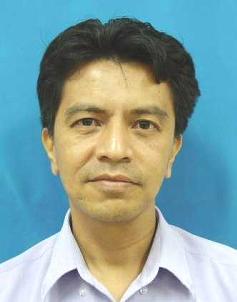
Prof. Dr. Nik Rumzi Nik Idris
Professor,
Universiti Teknologi Malaysia (UTM), Malaysia.
ABSTRACT
The evolution of AC motor drives was fundamentally transformed by the advent of power electronics (PE). The introduction of PE enabled AC motors to operate effectively in variable-speed applications, initially through the constant V/Hz control strategy. A major breakthrough came with the introduction of Field-Oriented Control (FOC), which revolutionized AC motor control and dynamic performances. However, FOC is inherently dependent on accurate machine parameters, and its torque and flux estimation can degrade under parameter variations, operating uncertainties, and model mismatches. To address some of these limitations, Direct Torque Control (DTC) emerged as an alternative high-performance control strategy. DTC offered a simpler control structure, faster dynamic response, and reduced computational burden compared with FOC, while also exhibiting greater robustness to parameter uncertainties. Despite these advantages, conventional DTC suffers from notable drawbacks, particularly high torque and flux ripples, variable switching frequency, and challenges in low-speed operation. More recently, Predictive Torque Control (PTC) has emerged as a new and highly promising paradigm in AC motor drives. Compared with FOC and DTC, PTC offers a more intuitive control framework, superior dynamic performance, and improved torque ripple characteristics, while naturally accommodating system constraints and multi-objective optimization. Rapid advances in this field continue to reshape the control landscape, with recent developments focusing on the enhanced robustness, and practical real-time implementation, and the integration of AI techniques.
This talk will trace the evolution of AC motor drive control—from classical scalar control to modern predictive and intelligent control strategies—highlighting the key technological milestones, performance trade-offs, and emerging research directions. These include the recent advances in AI-assisted modelling and control, including data-driven and model-free predictive control approaches aimed at improving robustness against parameter variations
.
BIOGRAPHY: Nik Rumzi Nik Idris received the B.Eng. degree in electrical engineering from the University of Wollongong, Wollongong, Australia, the M.Sc. degree in power electronics from Bradford University, Bradford, West Yorkshire, U.K., and the PhD degree from Universiti Teknologi Malaysia, in 1989, 1993, and 2000, respectively. He is a senior member of the IEEE and was a past chair (2014-2016) of the IEEE Power Electronics Malaysia Chapter. He is also the Associate Editors to the IEEE Transactions on Power Electronics (TPEL) and IEEE Journal on Emerging and Selected Topics in Power Electronics (JESTPE). Currently, he is a professor at the Faculty of Electrical Engineering, Universiti Teknologi Malaysia, and the former head of the Power Electronics and Drives Research Group (PEDG) UTM (2012-2023). His research interests include AC motor drives modelling and control, and electric vehicle systems.
